Why the bagel is different
A Montréal bagel is smaller, sweeter and denser than its New York cousin, with a wider hole and no salt in the dough. It is hand-rolled, boiled in honey-sweetened water, and baked in a wood-fired oven — which is why it arrives faintly smoky and slightly crisp. Fairmount has been at it since 1919, St-Viateur since 1957, three blocks apart in Mile End. Both are open around the clock. Montrealers have been arguing about which is better for the better part of a century, and nobody has ever won.
Smoked meat is not pastrami
It came to Montréal with Eastern European Jewish immigrants — beef brisket dry-cured with spices, smoked, then steamed until it gives way under a knife. It is peppery where pastrami is sweet, and it is always cut by hand. Reuben Schwartz opened his deli on Saint-Laurent in 1928, and the place has barely changed: same room, same lineup out the door, strangers sharing tables. Order medium-fat. That is not a compromise, it is the correct answer.
The mountain, and the man who shaped it
Mount Royal is the hill Cartier named in 1535, and the city took its name from it. The park on top was laid out in 1876 by Frederick Law Olmsted — the same man who designed Central Park — and he deliberately refused to flatten or formalise it. He wanted the winding approach to make the mountain feel bigger than it is. The lookout is named for Kondiaronk, the Huron-Wendat chief whose diplomacy helped bring about the Great Peace of Montréal in 1701.
Those staircases
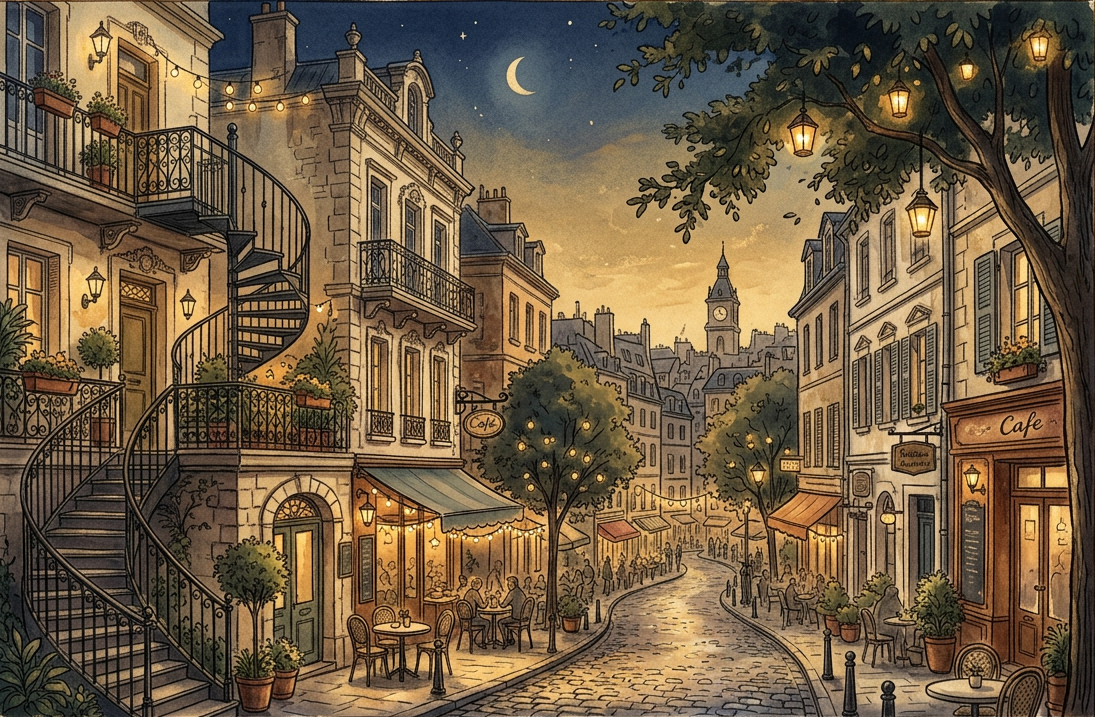
The exterior spiral staircases all over the Plateau are a quirk of old city bylaws. Rules pushed buildings back from the street and required a bit of front garden, while landlords still wanted separate entrances for every flat. Putting the stairs outside saved interior space and heating. The city banned them in 1940 — and then, decades later, recognised them as one of the things that makes Montréal look like nowhere else.